
What Is Cryotherapy?
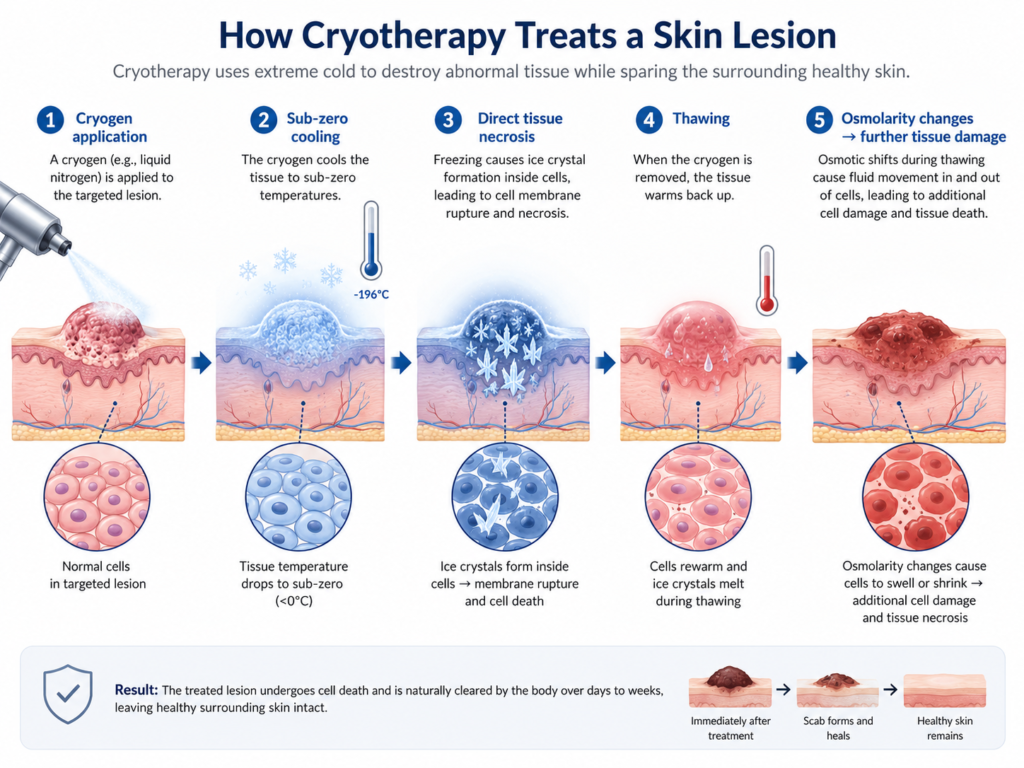
Cryotherapy is a minimally-invasive treatment that freezes skin surface lesions using extremely cold liquid or instruments (cryogen).
Cryotherapy, also known as cryosurgery or cryoablation, can be delivered with various cryogens. Liquid nitrogen is the most common and effective cryogen for clinical use (temperature –196°C).
Other cryogens include:
- Carbon dioxide snow (–78.5°C)
- Dimethyl ether and propane or DMEP (–57°C).
Cryotherapy is an effective alternative to more invasive treatment options as it is inexpensive, simple, relatively safe, and can be performed quickly in an outpatient setting.
What Is Cryotherapy Used For?
Benign lesions that may be treated by cryotherapy include:
Dermatologists can freeze small skin cancers such as superficial basal cell carcinoma (BCC) and in-situ squamous cell carcinoma (SCC) on the trunks and limbs, but this is not always successful, so careful follow-up is necessary.
What Are the Contraindications With Cryotherapy?
Cryotherapy should not be used for:
- Undiagnosed skin lesions
- Melanoma
- Dark-skinned patients
- Lesions which require tissue pathology
- Lesions within a circulation-compromised area
- Patients with previous adverse reactions to cryotherapy or unable to accept side effects
- Young children
- Unconscious patients
- Conditions exacerbated by cold exposure:
How Does Cryotherapy Work?
Cryotherapy works by using a cryogen to cool the targeted lesion to sub-zero temperatures causing direct tissue necrosis. The thawing process induces osmolarity changes which also results in tissue damage.
Liquid Nitrogen
Cryotherapy using liquid nitrogen involves the use of a cryospray, cryoprobe, or a cotton-tipped applicator. The dose, freeze-time, and delivery method depend on the location, depth, size, and tissue type of the lesion.
Liquid nitrogen spray methods include:
- Timed spot freeze technique/direct spray technique (standard treatment)
- Paintbrush method
- Rotary or spiral spray.
With the timed spot freeze technique, the spray gun is positioned 1 to 1.5cm above the centre of the skin lesion and sprayed until an ice ball encompasses the lesion (and required margin). The ice field is then maintained for 5 to 30 seconds depending on the lesion and depth of freeze. The treatment is repeated in some cases once thawing has completed. This is known as a ‘double freeze-thaw’.